
Building and Home Construction, Custom Build
To Remodel or Rebuild?
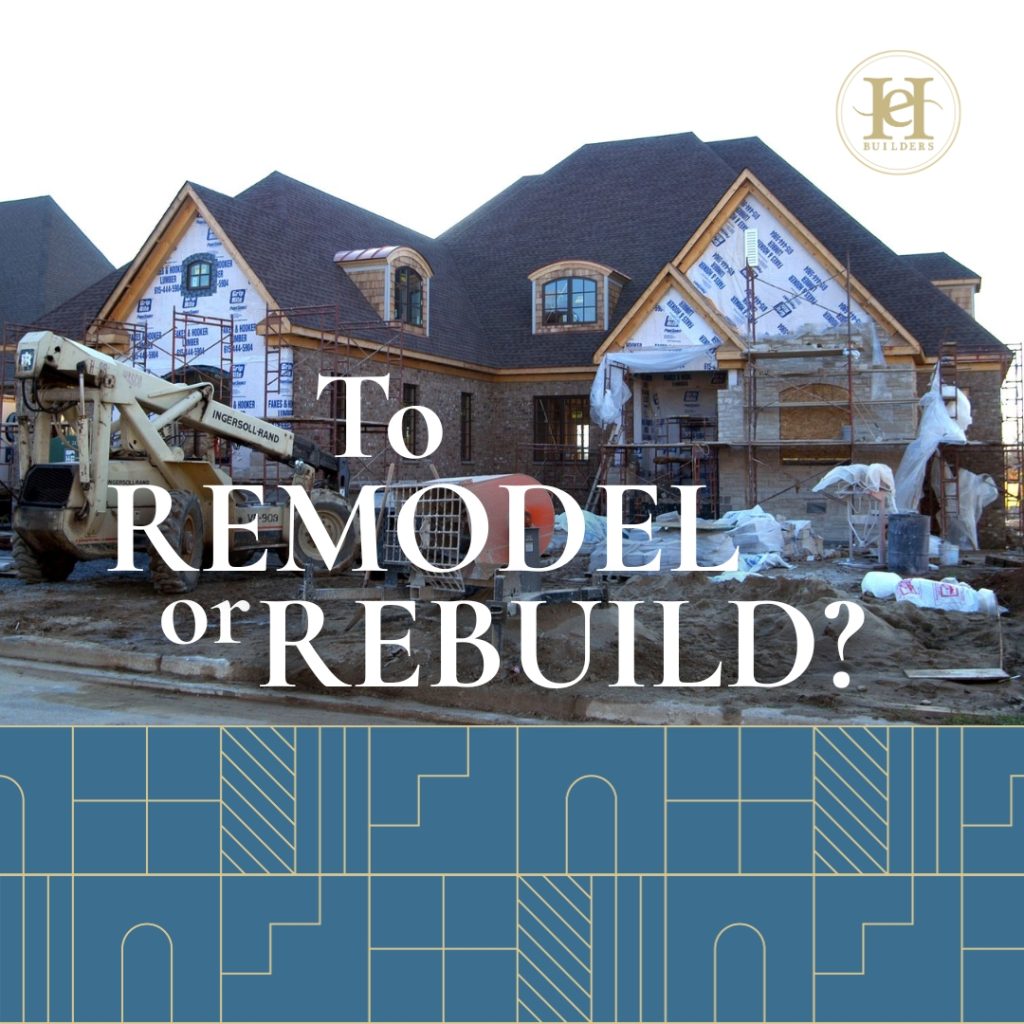
As a builder, I’ve seen it all from charming old homes with “good bones” brought back to life, to tired, worn-out structures where it made more sense to start fresh. Homeowners often come to me asking, “Should I remodel, or should I just tear it down and build new?” The answer isn’t one-size-fits-all, but there are some clear signs that point in one direction or the other.
When Remodeling Makes Sense
Remodeling is usually the better route when you want to preserve the existing structure’s value,
layout, or history, and when the work you need is mostly cosmetic or functional upgrades rather
than a complete overhaul.
1. The Structure is Sound
If your foundation is solid, framing is straight, and the roofline is intact, you’re starting from a
strong base. Structural issues can be expensive to fix, but if yours are minimal, remodeling will
save you both time and money.
2. You Like the Layout
If your home’s footprint and flow work for your lifestyle, there’s no reason to reinvent the wheel.
Remodeling lets you modernize finishes, update systems, and reconfigure certain spaces without
redoing everything.
3. The Budget is Moderate
For homeowners who want a noticeable transformation but aren’t ready to take on the cost of
building new, remodeling gives you more control over scope and spending.
4. You’re Preserving Character
Older homes often have craftsmanship and materials that are hard to find today. Remodeling
allows you to maintain that charm while making your home more livable.
When It’s Better to Tear Down and Rebuild
Sometimes, a house is simply past its prime. Here are the main reasons I advise clients to start
from scratch:
1. Major Structural Problems
If the foundation is cracked, the framing is compromised, or the roof structure is failing, repairs
can be more expensive than building new — and you may still end up with hidden issues later.
2. Layout Doesn’t Work — At All
If you’re constantly fighting against walls, hallways, or a design that doesn’t match your
lifestyle, a full rebuild can free you from the limits of the old floorplan.
3. Systems Need Complete Replacement
If plumbing, electrical, HVAC, insulation, and roofing all need upgrades, the cost to renovate can
quickly rival (or exceed) the cost of new construction without the benefit of a fully modern
design.
4. Zoning or Code Changes Work in Your Favor
In some areas, a rebuild might allow you to increase square footage, add another story, or make
other improvements that a remodel wouldn’t permit.
The Gray Area: When It’s a Close Call
In many cases, it’s not obvious at first glance which option is better. That’s why the first step should be a thorough inspection and cost comparison. A good builder will help you weigh:
- The true cost of renovation (including hidden surprises) vs. new construction
- The timeline for each option
- The long-term value added to your home
My Rule of Thumb
If the cost of a remodel starts approaching 60–70% of what it would take to build new, and you don’t have a strong sentimental reason to keep the old structure, rebuilding is often the smarter long-term investment.
A home is more than just walls and a roof; it’s where you live your life. Whether you choose to remodel or rebuild, make the decision based on solid numbers, realistic timelines, and the way you want to live, not just how things look today.
